

- Shopify vs WooCommerce
Shopify vs WooCommerce for Indian Businesses: Full Comparison
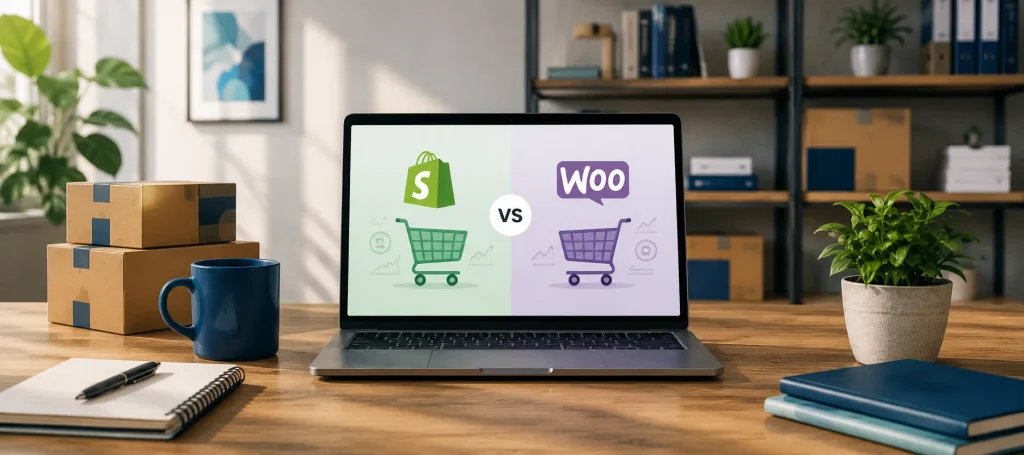
If you’re launching or migrating an online store in India, the Shopify vs WooCommerce decision is one of the first — and most consequential — choices you’ll make. Both platforms power millions of stores worldwide, but the right one for an Indian business depends on factors that don’t always show up in generic comparison articles written for the US or UK market. Here’s what actually matters when you’re building an eCommerce platform in India.
The Core Difference
Shopify is a fully hosted, all-in-one eCommerce platform — you pay a monthly subscription and Shopify handles hosting, security, and updates. WooCommerce is a free plugin that turns a WordPress website into an online store, but you (or your web development partner) manage hosting, security, and updates separately. This fundamental difference in ownership and control shapes almost every other comparison point.
The Payment Gateway Problem in India
This is the single biggest factor Indian businesses overlook. Shopify Payments — the platform’s built-in, fee-free payment processor — is not available in India. That means Indian merchants must integrate a third-party payment gateway like Razorpay or PayU, and each of these gateways charges its own transaction fee on top of what Shopify already charges. WooCommerce, by contrast, integrates natively and cost-effectively with Indian payment gateways, without the extra layer of Shopify’s own transaction markup. For most Indian businesses, this single factor tips the cost equation meaningfully toward WooCommerce.
Cost Comparison
Shopify’s pricing starts with a recurring monthly subscription (typically $29–$299/month depending on plan), plus transaction fees, plus your payment gateway’s fees, plus the cost of any premium themes or apps you add. WooCommerce itself is free, but you pay for hosting, an SSL certificate, and any premium plugins or themes you choose — costs that are typically lower and more predictable over time, especially at scale. If you’re running a high-volume store, WooCommerce’s absence of platform-level transaction fees can save a significant amount annually.
Customization and Flexibility
WooCommerce, built on WordPress, offers far greater customization freedom. Because it’s open-source, developers can modify almost anything — checkout flow, product pages, integrations with CRMs and marketing tools — without being boxed in by platform restrictions. Shopify is more locked down: customization beyond its theme and app ecosystem often requires Shopify’s own liquid templating language and comes with more constraints. For businesses with unique catalog structures, subscription models, or B2B pricing tiers, WooCommerce’s flexibility is usually the deciding factor.

Ease of Use and Maintenance
Shopify wins clearly here. It’s designed for non-technical store owners — setup is fast, updates happen automatically, and there’s no server management to worry about. WooCommerce requires more hands-on maintenance: WordPress core updates, plugin compatibility, and security patching are your responsibility (or your web development partner’s). If you don’t have technical support on retainer, this is worth weighing seriously.
Which One Should You Choose?
Choose Shopify if:You want the fastest possible setup, prefer a fully managed platform with minimal technical maintenance, and are comfortable with the additional payment gateway fees associated with running a Shopify store in India.
Choose Shopify if:You want the fastest possible setup, prefer a fully managed platform with minimal technical maintenance, and are comfortable with the additional payment gateway fees associated with running a Shopify store in India.
Our Recommendation for Most Indian SMEs
For the majority of small and mid-sized Indian businesses we work with, WooCommerce tends to be the more cost-effective long-term choice — specifically because of the Shopify Payments gap in India. That said, the right answer always depends on your product catalog, growth plans, and internal technical capacity. A quick discovery conversation with a web development partner who’s built both types of stores can save you from an expensive platform switch a year down the line.
Not sure which platform fits your business?*
we’ll map out the right eCommerce solution for your specific catalog, budget, and growth stage.


