


 Home
Home
 Solution
 Case Studies
 Blogs
Blogs


- Web Development
Do You Need a Mobile App or a Progressive Web App? A Decision Guide
Do You Need a Mobile App or a Progressive Web App? A Decision Guide
"Should we build an app?" is a question that comes up early for many growing businesses—and the honest answer is often "not yet, or not the way you're imagining." Native mobile apps and progressive web apps (PWAs) solve overlapping but distinct problems, and choosing the wrong one can waste significant time and budget. Here's how to decide.
What Each Option Actually Is
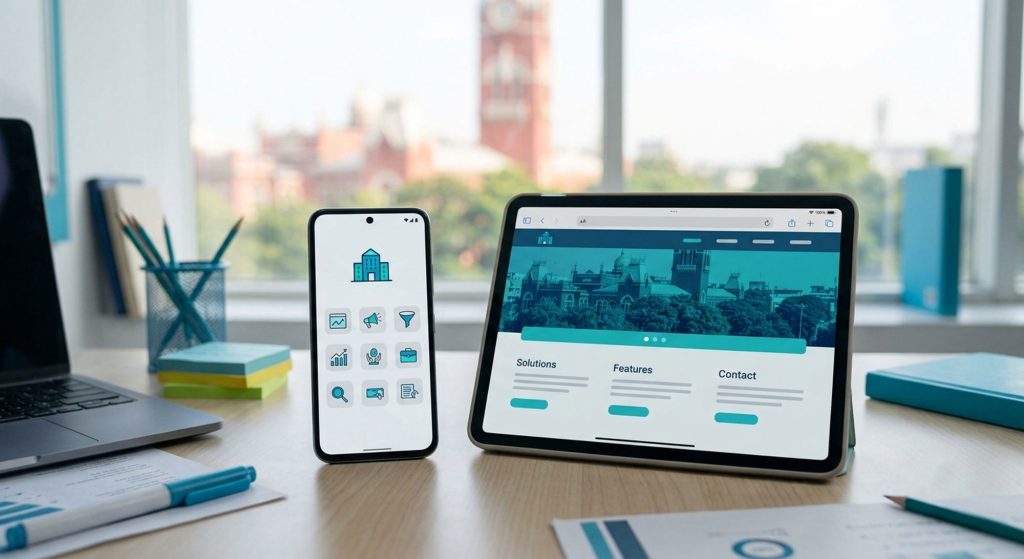
A native mobile app is built specifically for iOS or Android, distributed through app stores, and provides full access to device capabilities such as the camera, GPS, push notifications, and offline storage. A Progressive Web App (PWA) is an advanced website that delivers an app-like experience, allowing users to install it on their home screen while running through a browser instead of as a native application.
When a Native App Makes Sense
You need deep device integration. If your product relies on advanced hardware features such as background location tracking, Bluetooth connectivity, extensive camera functionality, or other device-level capabilities, native development is generally the better choice.
Performance is business-critical. Native applications typically provide smoother performance for graphics-intensive, highly interactive, or feature-rich experiences where responsiveness directly affects user satisfaction.
App Store presence matters for discovery. If app store visibility is an important customer acquisition channel or your users expect to find your product in the Apple App Store or Google Play Store, only a native application can deliver that advantage.
You have the budget for ongoing maintenance. Native development often requires supporting both iOS and Android separately, along with continuous updates as operating systems evolve, making long-term maintenance significantly more expensive.

When a Progressive Web App Makes More Sense
You want broader reach without app store friction. A PWA works across modern browsers on mobile and desktop without requiring downloads or approval through app stores, making it easier for users to access your product instantly.
Your budget doesn't support dual-platform development. A single PWA codebase serves multiple platforms, reducing both development costs and long-term maintenance compared to maintaining separate native applications.
Core functionality doesn't require deep hardware access. If your business focuses on browsing, booking, eCommerce, or content delivery rather than advanced device features, a PWA often provides an excellent user experience at a much lower cost.
The Cost Reality
Native app development represents a significantly larger investment than building a Progressive Web App. For many small and medium-sized businesses, the additional cost is difficult to justify unless native functionality provides measurable business value.
A Middle Path: Start With a PWA, Consider Native Later
A common approach for growing businesses is launching with a PWA to validate demand, gather user feedback, and understand usage patterns before investing in native applications. This reduces risk while keeping future expansion options open.
Questions to Ask Before Deciding
Does your product genuinely require hardware features a PWA can't provide? Is app store visibility an essential acquisition channel? Can your business support the long-term maintenance costs of native development? Answering these questions honestly will usually make the right choice much clearer.
Not sure whether your business needs a native app or a PWA?
Our development team will evaluate your business goals, budget, and technical requirements to recommend the solution that delivers the best long-term value—not simply the most complex one.
Book Free Consultation


