


 Home
Home
 Solution
 Case Studies
 Blogs
Blogs


- UI/UX & Design
Top UI/UX Design Trends Shaping Digital Products in 2026
Top UI/UX Design Trends Shaping Digital Products in 2026
Design trends move fast, but not every trend is worth chasing. Some genuinely improve usability and conversion; others are purely aesthetic fads that age poorly within a year. Here are the UI/UX design trends actually shaping digital products in 2026 — and an honest read on which ones are worth adopting for your business.
AI-Personalized Interfaces
Why it matters: Interfaces are increasingly adapting in real time based on user behavior—showing different content, layouts, or recommendations depending on what a specific user has done before. This goes beyond simple "recommended for you" sections into interfaces that genuinely reconfigure themselves for different user types. For businesses with diverse customer segments, this can meaningfully improve engagement, though it requires solid underlying data infrastructure to do well.
Bold, Confident Minimalism
What's changing: Minimalism isn't new, but 2026's version is bolder—large, confident typography, high-contrast color blocking, and generous white space that guides attention rather than just decorating a page. The trend moves away from the overly safe, template-like minimalism of recent years toward designs with a clearer visual point of view. This works particularly well for brands wanting to stand out in crowded categories like eCommerce and SaaS.
Micro-Interactions With Purpose
Best practice: Small animations—a button that responds satisfyingly to a click, a subtle transition between states—continue to matter, but the trend has shifted toward purposeful micro-interactions that provide feedback and guide users, rather than decorative animation for its own sake. Overused motion design that slows down perceived performance is falling out of favor as businesses prioritize speed and clarity.
Voice and Conversational Interfaces
The next interface: As AI chatbots and voice assistants become standard in customer-facing products, UI design increasingly needs to accommodate conversational interaction patterns alongside traditional visual navigation. This means designing clear handoffs between chat-based interaction and traditional interface elements, rather than treating them as entirely separate experiences.
Accessibility as a Design Standard, Not an Afterthought
Design for everyone: Accessible design—proper color contrast, keyboard navigation, and screen-reader compatibility—has moved from a compliance checkbox to a genuine design priority. Businesses building new digital products in 2026 are increasingly expected to meet accessibility standards from the initial design phase instead of retrofitting them later.
Depth and Texture Making a Comeback
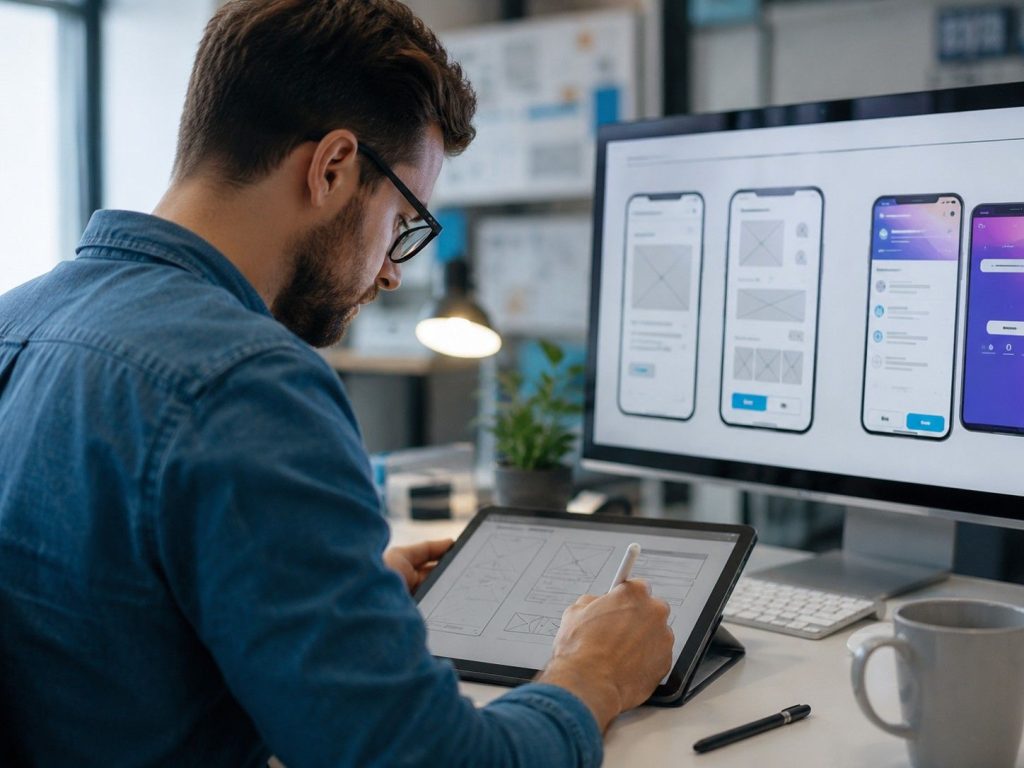
A premium feel: After years of flat design dominance, subtle depth, soft shadows, layered elements, and gentle gradients are returning. These techniques create a more tactile, premium experience without reverting to heavy skeuomorphic design. The trend is especially common across fintech, SaaS, and premium digital products.
Immersive and 3D Elements for Product Visualization
Shopping is becoming interactive: For eCommerce and product-focused businesses, lightweight 3D visualization and AR try-on experiences are increasingly expected rather than novel. Fashion, furniture, and consumer electronics brands benefit the most by helping customers evaluate products before making a purchase.
Which Trends Are Worth Adopting?
Focus on value, not hype: Not every business needs every trend. The right question isn't what's trending—it's what genuinely improves your customers' experience. Purposeful micro-interactions, accessible design, and bold minimalism provide the best return for most businesses, while AI personalization and 3D visualization are ideal for companies with rich behavioral data or highly visual products.
Designing for 2026 and Beyond
The bottom line: The strongest UI/UX design in 2026 isn't defined by any single trend—it's defined by design that removes friction, builds trust, and gets out of the user's way. Trends are worth adopting only when they genuinely improve the experience for your audience.
Want a UI/UX refresh that reflects where design is heading—without chasing every fad?
Our design team creates user experiences that balance modern trends with usability, accessibility, and measurable business results.
Book Free Consultation


