 (+91) 98413 68480
 +1 (740) 513 2133





Code vs. No-Code: What’s Right for Your Business?
Aximz Technologies
In today’s digital-first world, businesses are under constant pressure to innovate quickly and deliver seamless digital experiences to customers. As the demand for faster product delivery and more flexible development options rises, organizations face a pivotal question: Code vs. No-Code — which approach is right for your business?
At Aximz Technologies, we understand the complexities of this decision. Both code and no-code development have their advantages and limitations. Choosing the right path depends on your business goals, technical capacity, project complexity, and long-term scalability plans. In this blog, we break down the differences, use cases, and benefits of both approaches to help you make an informed decision.
Understanding the Basics: Code vs. No-Code

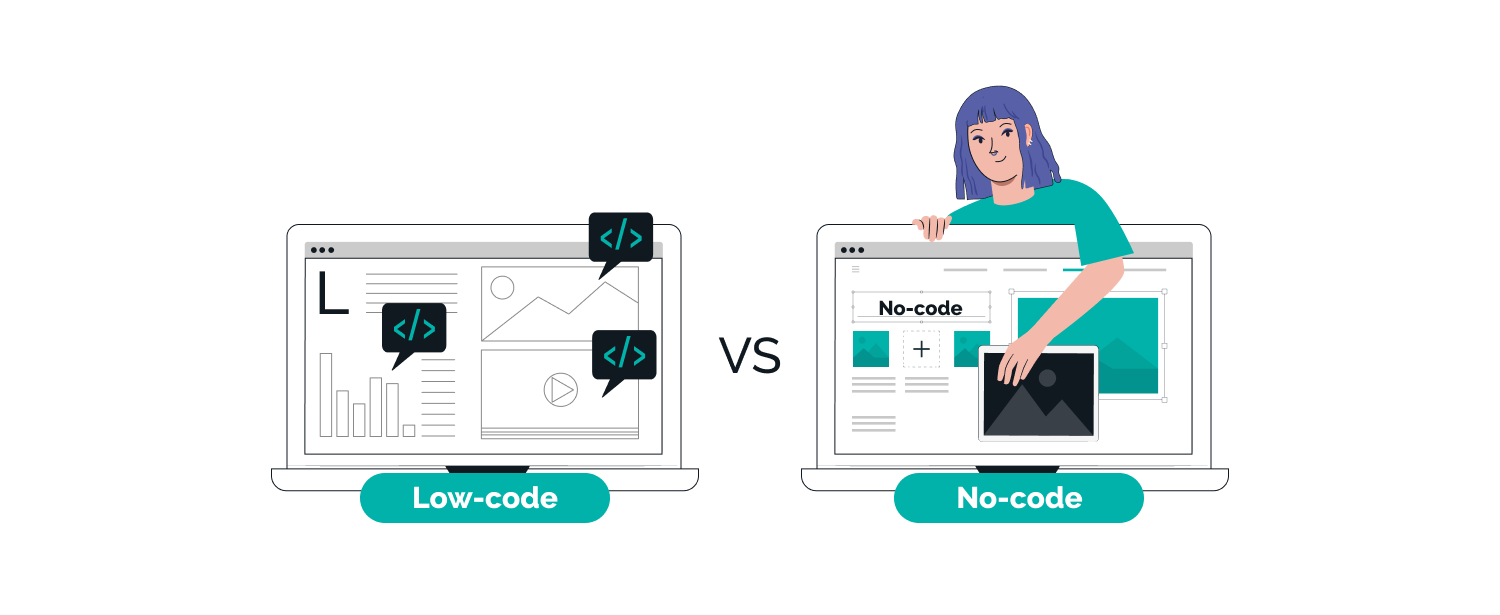
Code development refers to traditional software development where skilled programmers write custom code to build web or mobile applications. This approach offers complete flexibility, control, and scalability, but it typically requires more time, technical expertise, and higher development costs.
No-code development, on the other hand, enables users to build applications using visual interfaces and pre-built components without writing a single line of code. It democratizes development by empowering non-technical users — often referred to as “citizen developers” — to create and deploy functional applications with speed and ease.
As businesses strive for agility and efficiency, the Code vs. No-Code conversation has become more relevant than ever. Each approach serves a different purpose and caters to different organizational needs.
The Rise of No-Code Platforms
No-code development platforms have gained immense popularity over the past few years. Their appeal lies in their simplicity and the ability to reduce development timelines significantly. Tools like Webflow, Bubble, Airtable, and Zapier have enabled entrepreneurs, marketers, and product managers to create functional MVPs, automate workflows, and launch digital solutions — all without traditional coding skills.
At Aximz Technologies, we’ve helped numerous startups and SMEs harness no-code tools to validate ideas, digitize operations, and optimize internal processes. These platforms are especially ideal for:
- Startups with limited technical resources
- Internal business applications
- Workflow automation
- Rapid prototyping
- MVP (Minimum Viable Product) development
However, despite its benefits, no-code has limitations when it comes to handling complex logic, deep customization, or scaling to large user bases.
The Power of Custom Code
When performance, customization, and scalability are top priorities, traditional coding is still the gold standard. Custom code allows developers to build tailor-made applications from the ground up, incorporating unique features, advanced integrations, and robust security protocols.
For businesses looking to develop enterprise-grade applications, e-commerce platforms, AI-driven tools, or high-performance mobile apps, the flexibility of code development is unmatched. With the right team, coding ensures that your digital product aligns perfectly with your business logic and user expectations.
At Aximz Technologies, our expert developers work closely with clients to build custom software solutions that are not only functional but also scalable, secure, and future-ready. Whether you’re launching a complex SaaS product or reimagining your legacy systems, our coding capabilities deliver precision and performance.
Comparing Code vs. No-Code: Key Factors to Consider

1. Development Speed
- No-Code: Offers lightning-fast development, often allowing apps to be built in days instead of weeks.
- Code: Requires more time due to design, architecture planning, testing, and deployment phases.
If speed is your priority — for example, to test an MVP or quickly digitize a workflow — no-code may be your best bet.
2. Customization
- Code: Provides unlimited customization options to meet specific requirements.
- No-Code: Limited to the features and components provided by the platform.
Businesses with unique needs or complex logic may find coded solutions more effective.
3. Scalability
- Code: Easily scalable with optimized architecture and infrastructure.
- No-Code: May struggle with performance issues as usage grows, depending on the platform.
Growing enterprises aiming for long-term scalability should weigh the limitations of no-code carefully.
4. Technical Skill Requirements
- No-Code: Accessible to non-developers with minimal training.
- Code: Requires skilled developers with expertise in programming languages, frameworks, and databases.
If your team lacks technical know-how, no-code offers a user-friendly alternative to get things moving.
5. Cost
- No-Code: Lower upfront costs, especially for small projects or startups.
- Code: Higher investment in talent, infrastructure, and ongoing maintenance.
Budget-conscious businesses may prefer no-code to begin with, then invest in custom code as they grow.
Hybrid Approach: The Best of Both Worlds
At Aximz Technologies, we often recommend a hybrid approach — leveraging both no-code and code where they’re most effective. For instance, you might use a no-code tool to build an internal dashboard, while developing your customer-facing application with custom code for enhanced performance and branding.
This blended strategy allows businesses to be nimble and resource-efficient without compromising on functionality or long-term goals.
Use Case Scenarios
Startup MVP Development
For startups looking to test a product idea with real users, no-code platforms offer a fast and cost-effective way to build and iterate on MVPs. You can gather feedback, test assumptions, and refine your value proposition before investing in full-scale development.
Enterprise Software Development
When security, performance, and data control are paramount, custom code is the way to go. Enterprises building proprietary systems, custom CRMs, or integrations with legacy software benefit from the depth and flexibility of traditional coding.
Internal Tools and Automation
No-code tools are excellent for automating repetitive tasks, building internal dashboards, or streamlining team workflows. These tools improve productivity without taxing your development team’s bandwidth.
E-Commerce Platforms
While no-code tools like Shopify offer rapid e-commerce deployment, businesses seeking a unique user experience, advanced search features, or deep analytics often turn to custom-coded platforms for more control.
Aximz Technologies: Guiding You on the Right Path
Choosing between Code vs. No-Code isn’t just a technical decision — it’s a strategic one. At Aximz Technologies, we partner with businesses to assess their needs, evaluate their resources, and recommend the right development approach.
Our team of developers, designers, and solution architects can help you:
- Evaluate which approach aligns with your goals
- Prototype quickly using no-code or low-code tools
- Build scalable, secure solutions with custom code
- Maintain and enhance applications as your business grows
Whether you’re launching your first app or upgrading an enterprise system, Aximz Technologies is equipped to deliver smart, future-ready digital solutions.
Final Thoughts: Code vs. No-Code – Which One Wins?
There’s no one-size-fits-all answer to the Code vs. No-Code debate. It all depends on your specific use case, business maturity, technical resources, and future aspirations.
If you need speed, simplicity, and low overhead for a basic application, no-code is a clear winner. But if your vision involves high performance, unique features, or complex integrations, investing in custom code is a smarter long-term strategy.
Ultimately, the best decision is a strategic one — and that’s where Aximz Technologies comes in. With our experience in both code-based and no-code development, we guide businesses to solutions that deliver value, speed, and scale.
Let’s build your next big idea — the smart way. Contact Aximz Technologies today to explore the right development path for your business.
Comments are closed.